
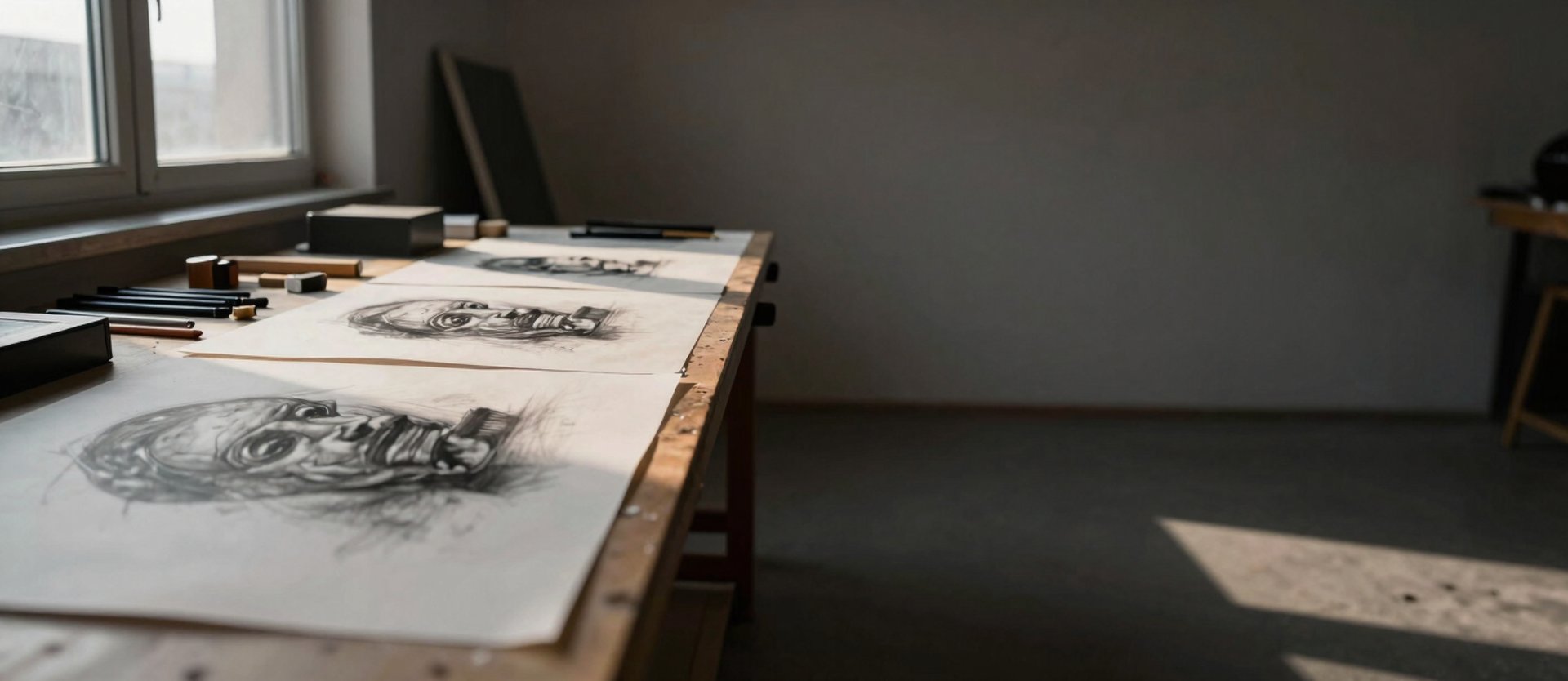
Negative Space and the Deliberate Pause
What slows down in the studio when attention is treated as a material — and what that slowness makes possible in the work.
There is a particular quality of attention that arrives only when you stop pushing toward the next mark. Artists trained in speed rarely encounter it. The pause feels like failure before it feels like anything useful.
The practice begins before the substance enters. It begins in the decision to treat each session as a structured observation — not an output event, but a noticing event. The canvas is already full of what you haven't seen yet.
What the pause actually does
Perceptual slowdown is not mystical. It is structural. When the threshold for noticing drops, forms that were invisible under habitual speed become available. The discipline is the translation — moving what you notice into the work with precision.
This is where rigor enters. The substance does not do the work. You bring a prepared eye, a clear question about the piece, and a decision about what you will look at. The rest is practice — the same practice you already know.
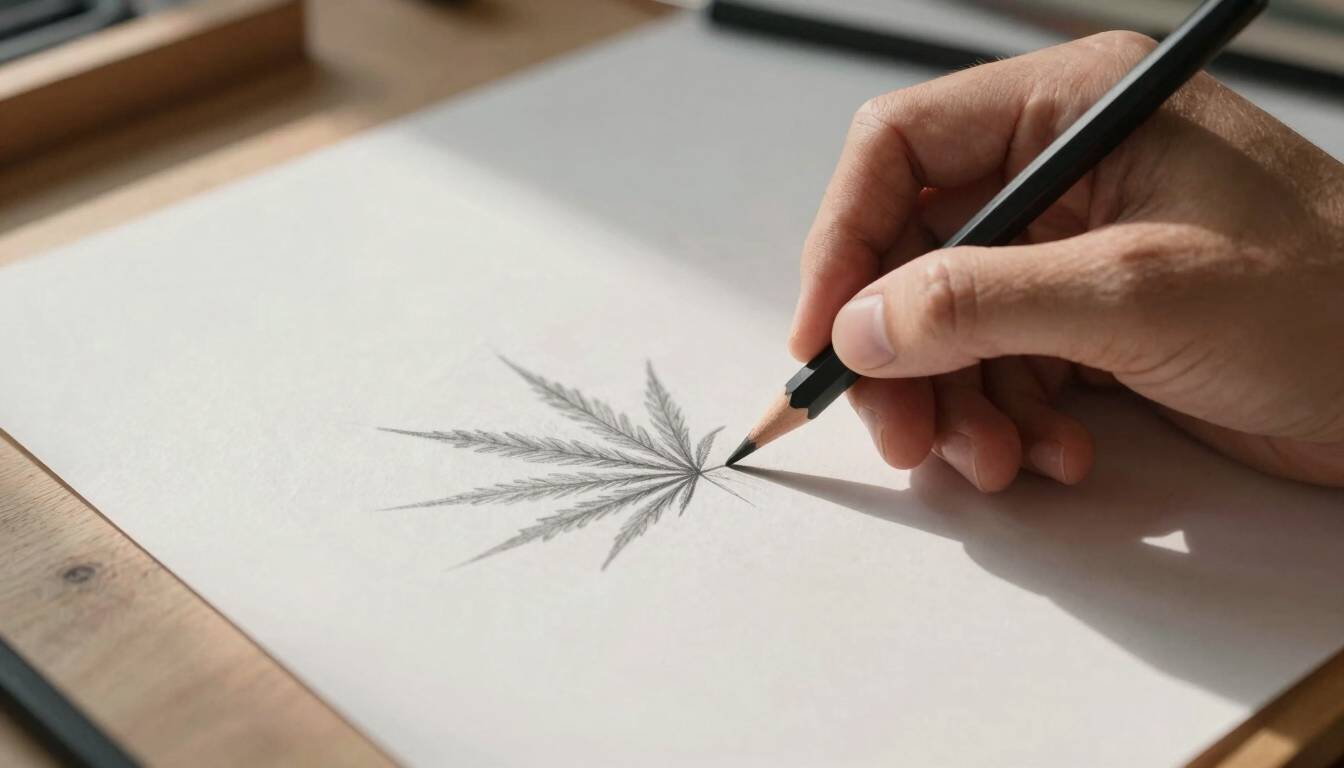
After the session, the record matters as much as the work itself. A brief written note — what you noticed, what you translated, what you left on the table — turns a single sitting into a data point in a longer inquiry.
Over time, the archive of those notes is more valuable than any single piece it documents. Pattern becomes visible. You begin to see where your attention goes by default, and where it needs to be directed.
Structure is what makes it repeatable
Intention without structure produces one good session. Structure — a consistent pre-work notation, a defined question for the sitting, a post-work record — turns perception into a tool you can pick up and put down deliberately.
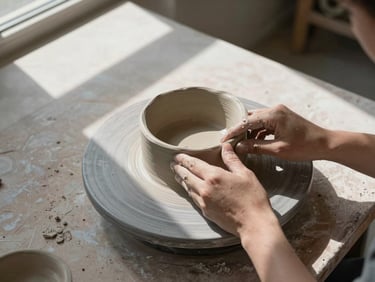
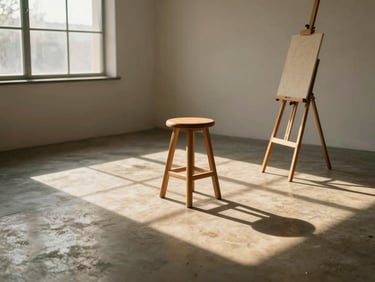
Adjacent pieces in the archive
Pre-Work Notation as a Practice
Resistance in the Material
The Studio Before You Enter
How a three-minute written prompt before each session changes what the hand reaches for first — and why that matters for sustained work.
When the material pushes back, attention sharpens. An inquiry into why difficulty in the work is a condition to sustain rather than resolve.
What the physical space of work communicates before a single mark is made — and how to read its conditions rather than ignore them.